
Custom Cellar Doors & Egress Systems | Window Wells | Steelway Cellar Doors
Custom Cellar Doors & Egress Systems | Window Wells | Steelway Cellar Doors
Many homeowners in the Greater Philadelphia and Tri-State area start their cellar door replacement search the same way: they look for a Bilco door.
That is completely understandable. Bilco has been a familiar name in basement doors for decades, and many homeowners use the term “Bilco door” to describe almost any exterior cellar door. If you grew up seeing those angled metal doors on homes throughout Pennsylvania, New Jersey, and Delaware, it makes sense that you would assume a standard replacement is the first and only option.
But here is the problem: many local homes do not have standard basement entries.
Older foundations, stone walls, brickwork, additions, uneven grades, previous repairs, and unusual stairwell layouts are common throughout this region. That means a standard cellar door may not fit your home properly.
When that happens, homeowners often believe they have to make the house fit the door. They may be told to alter the opening, add extensions, patch the difference with wood, or build something temporary.
Steelway was built around a better idea: make the door fit the space.
That is why custom cellar doors exist.
For decades, standard cellar doors have been the most familiar option for homeowners. They are available in common sizes, and work well when the basement entry matches the dimensions of the product.
Steelway offers standard cellar doors for common openings, including heavy steel angled cellar doors with no leak points, quality gas shocks, and professional red oxide primer. For the right home, a standard cellar door can be a strong and practical replacement.
But a standard door only works when the opening is actually standard.
That is where many local homeowners run into trouble. After comparing the available sizes, it becomes clear that the basement entry is too long, too wide, too narrow, too low, too flat, or shaped differently than the product expects. The stairwell may run alongside the house, or the opening may sit in a corner where one side of the stairwell is the home itself. In other cases, a low-lying entry creates added water exposure, or a sloped foundation makes a traditional frame difficult to fit.
In other words, the issue is not a bad home. It is a non-standard opening.
Homes across the Philadelphia region and the surrounding Tri-State area come with a wide range of basement entry conditions. A home in King of Prussia may have a different type of foundation than a rowhome in Philadelphia, a farmhouse in Chester County, a home in South Jersey, or a property in Delaware.
Even homes in the same neighborhood can have very different cellar entrances depending on when they were built, how they were repaired, and if any projects were completed by owners.
That is one reason homeowners often inherit strange cellar door problems. The existing door may already be patched together. It may have been built from wood. It may have shingles on it. It may have extra metal pieces, old flashing, or multiple seams. It may leak, rot, rust, or feel unsafe to open.
Those homemade and modified doors usually exist for a reason: at some point, someone could not find a standard door that fit.
That does not mean they made the right long-term choice. It means they were solving the problem with the options they knew.
Steelway gives homeowners another option.
Before
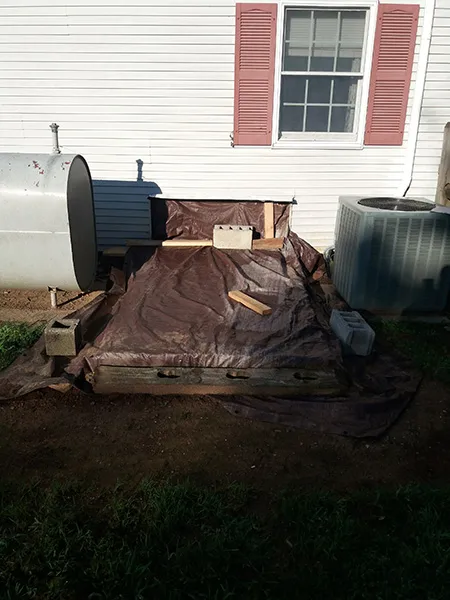
After
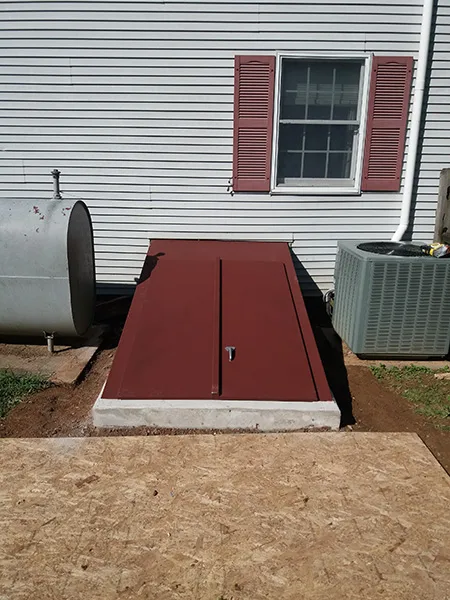
Before
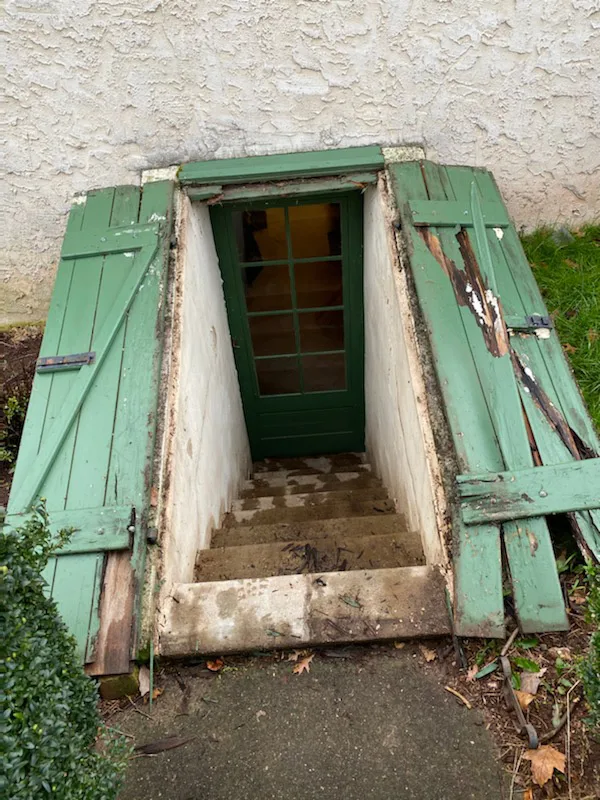
After

Before

After
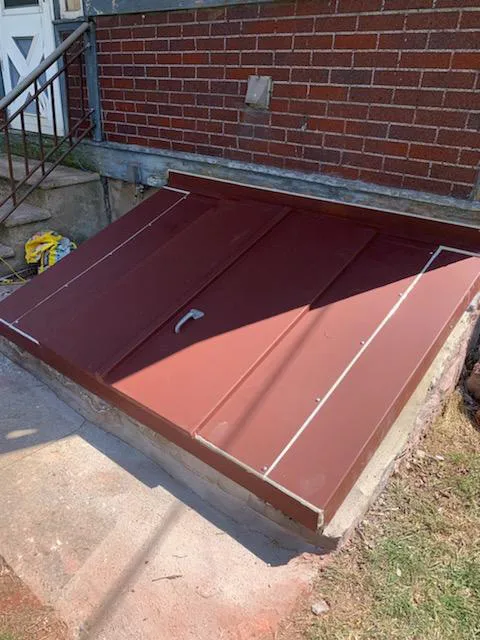
Before
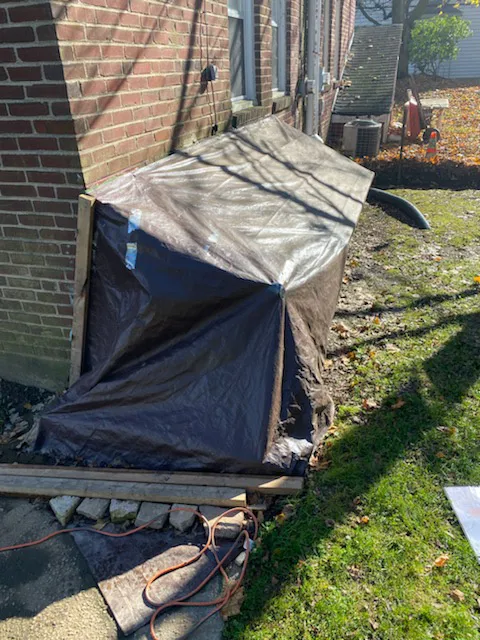
After
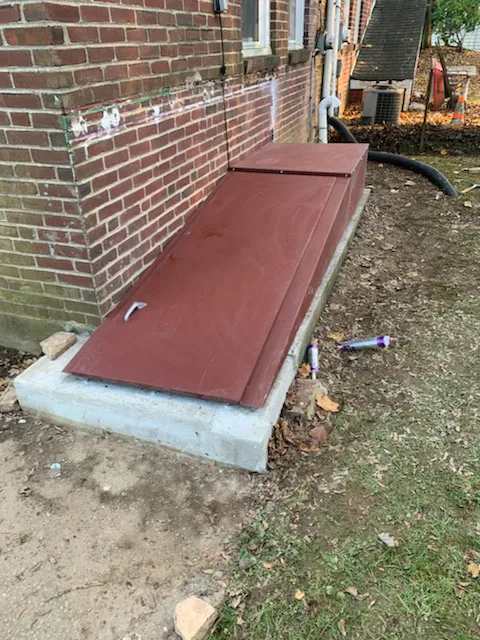
Before
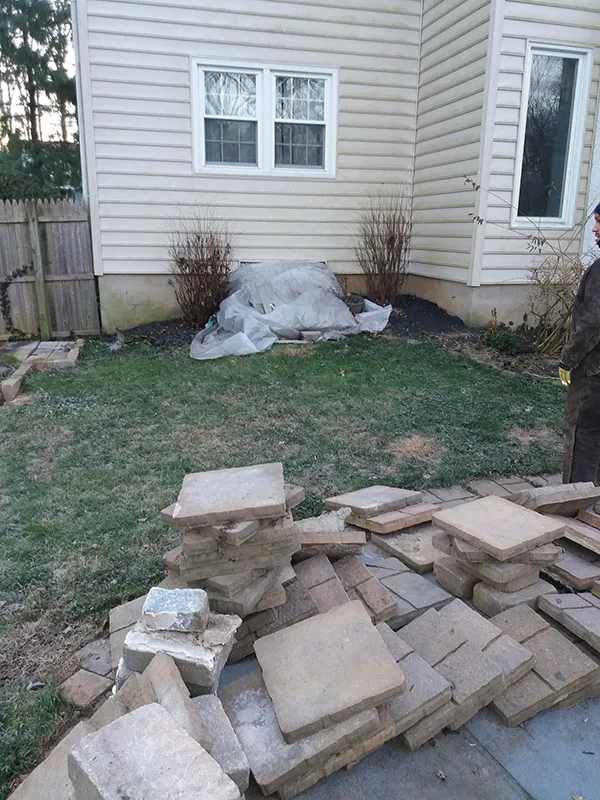
After
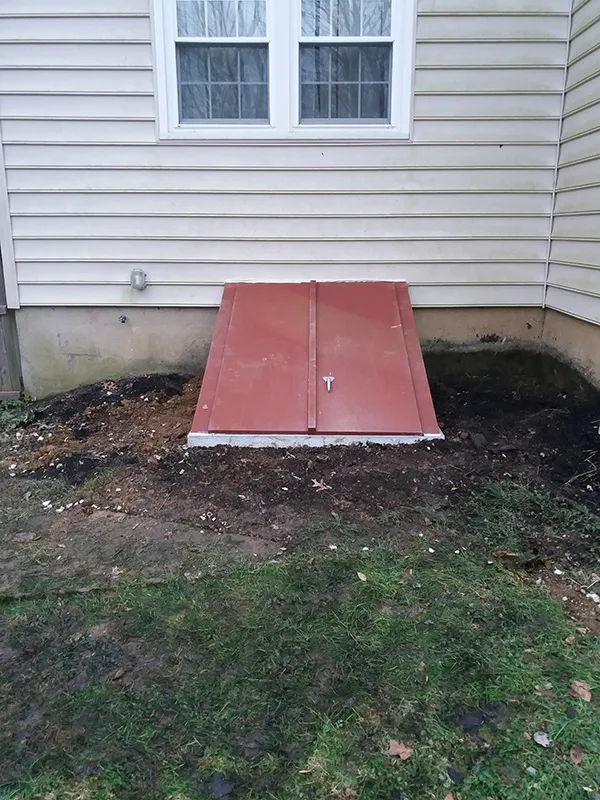
Before

After

Before
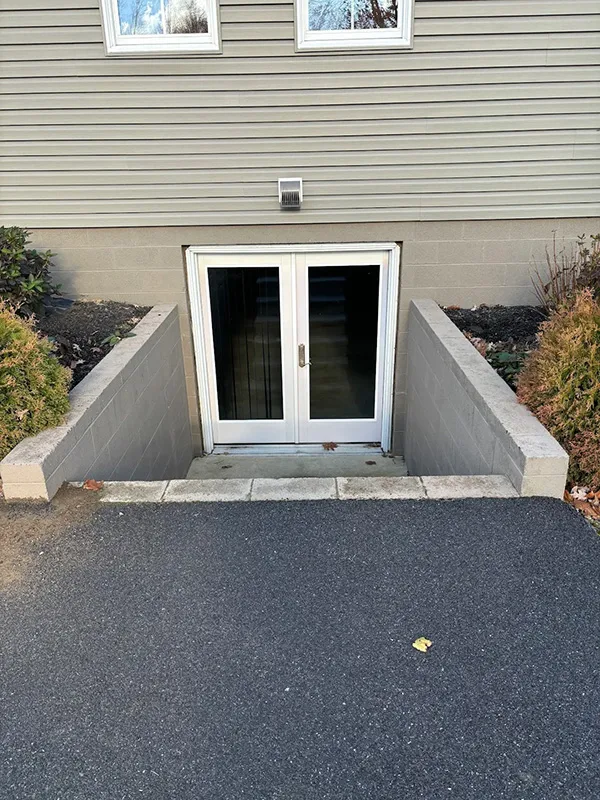
After
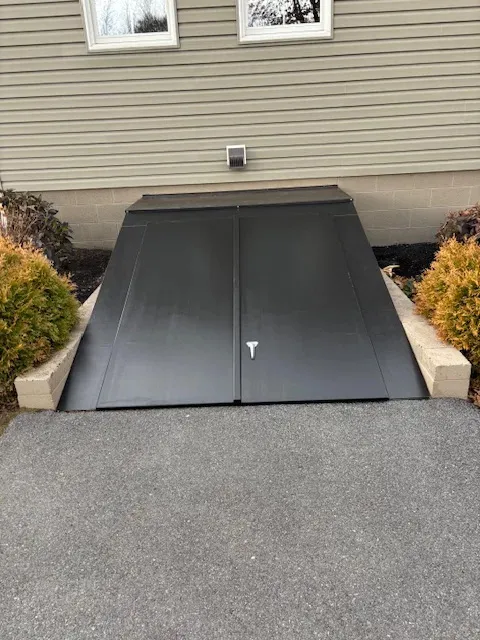
A custom cellar door is a cellar door built to fit the exact measurements and conditions of your basement entry. Instead of choosing from a limited set of stock sizes, the door is manufactured for the opening you already have.
That is important because a cellar door has to do more than cover an opening. A properly built door helps protect the basement entrance from rain, snow, debris, pests, and unwanted access. Safe operation, proper placement on the foundation, and a finished appearance all matter, especially when the door is exposed to the weather year after year.
Steelway’s custom cellar doors are built with 100% steel construction, fully welded joints with no bolts, multi-coat iron oxide primer, and a weather-tight design. Because they are made to the exact measurements of the job site, homeowners can avoid costly extensions and inappropriate add-ons.
That is the purpose of true custom manufacturing: to account for the real conditions of the entryway from the beginning, so the finished door performs as a long-term solution instead of another workaround.
When a standard cellar door does not fit, the quick fix may feel less expensive at first. But forcing the wrong door into the wrong opening can create long-term costs.
For example, if the opening is longer than a standard door, someone may recommend adding extensions. In some cases, extensions can be appropriate. But if the entire solution depends on stacking on extra pieces just to make the door reach, the finished product may have more seams than necessary.
More seams mean more potential weak points.
Around a basement entry, weak points matter. They can become places where water seeps in, where rust begins, where materials shift, or where the installation starts to fail over time.
Another common fix is to modify the foundation or surrounding structure so the standard door can fit. That can add labor, cost, and risk. If the work is not done correctly, it can affect the surfaces the door needs to seal against. A cellar door replacement should not create unnecessary foundation problems just because the selected door was not made for the opening.
The third quick fix is a homemade door. Around older homes, these are common. Homeowners may see wood cellar doors, plywood covers, roofing shingles, or patched-together metal sections. They may have worked for a while, but they usually do not hold up like a properly built steel cellar door.
A homemade door can rot. It can warp. It can leak. It can become heavy or unsafe to use. It can look worn down quickly. And after a few years, the homeowner is often paying to solve the same problem again.
That is how a “cheaper” fix becomes more expensive.
Investing in the right custom cellar door from a company with more than 60 years of experience can save homeowners from paying again and again for repairs on a door that was never made to fit.
If a Bilco door or other standard cellar door will not fit your basement entry, that does not mean you are out of options.
It means your home may need a custom cellar door.
This is an important distinction because many homeowners assume the standard option is the only option. If they cannot find a size that fits, they think the problem is their house. But the issue may simply be that the product they are looking at was not built for their specific opening.
Steelway manufactures both standard and custom cellar doors. That means the goal is not to push every homeowner into a custom product. The goal is to help homeowners choose the door that actually fits.
If standard fits, standard works.
If standard does not work, custom options exist at Steelway.
Because basement entries vary so much, custom cellar doors are not one-size-fits-all. Different homes need different configurations.
Here are some of the custom cellar door types Steelway offers.
Angled cellar doors are made for angled openings leading to a basement or cellar. This is the most familiar style for many homeowners, but not every angled opening matches a standard size. A custom angled cellar door can be built when the entry is longer, wider, narrower, or otherwise outside standard dimensions.
Flat cellar doors are typically used when the foundation is already sloped. For some older homes, the foundation itself creates the angle, so the door needs to work with that existing condition rather than sit on a standard raised frame.
Corner cellar doors are used when one side of the cellar stairwell is also the side of the house. Since there is not a traditional foundation wall on both sides, this type of opening needs a different solution than a standard cellar door.
B-style cellar doors include an extended front apron for added protection in low-lying areas. These can be helpful when the grade around the basement entrance creates additional exposure to water, debris, or runoff.
Along-side cellar doors are used when the cellar entrance runs parallel to the basement or foundation wall. These entrances are common enough that homeowners recognize the problem, but they often do not know there is a specific custom door type designed for it.
Angle-on-angle cellar doors are designed for angled foundation conditions where the entry requires more than a typical angled door. If the foundation and doorway create a more complex angle, this type of door can provide the proper fit.
These different styles are a major reason homeowners should not settle too quickly for the closest standard size. The right cellar door depends on the actual shape and condition of the basement entrance.
A custom cellar door should solve the fit problem, but it should also be built for long-term performance.
Steelway custom doors are made from heavy-gauge hot rolled steel with fully welded joints and multiple coats of iron oxide primer. The fully welded construction creates a strong, clean design without relying on unnecessary bolts. The weather-tight design helps protect the basement entrance from water, pests, debris, and harsh weather.
Security is also part of the design. Steelway’s fully welded doors include lock systems designed to help prevent unwanted access to the home or business.
Ease of use matters too. Depending on the size and weight of the door, Steelway can include spring assist to support one-handed operation. That is especially important on custom doors because every opening is different. A larger or heavier door should still be practical for the homeowner to use.
The result is a cellar door that does more than fit. It protects, operates, secures, and lasts.
You may need a custom cellar door if your current door looks like it was built by hand, if it has multiple patched areas, or if it was made from wood, plywood, shingles, or mixed materials.
You may also need custom if your existing door leaks, does not sit evenly, has visible gaps, or requires unusual framing to stay in place.
Another sign is when a contractor says they cannot find a standard door that fits. That may be true, but it does not mean the project is impossible. It usually means the opening requires a custom cellar door built to the actual measurements of the space.
Before you approve a quick fix, ask these questions:
These questions can help you avoid investing in a solution that only works temporarily.
Steelway is based in King of Prussia and has been named experts on cellar doors since 1963. That local experience matters, especially in a region with so many older homes and unusual basement entry conditions.
A general contractor may only run into these situations occasionally. A homeowner may only replace one cellar door in their lifetime. But Steelway has spent decades measuring, manufacturing, and installing doors for the kinds of openings that standard products cannot always solve.
That experience helps homeowners avoid guesswork.
Instead of asking, “How can we make this standard door work?” Steelway can help determine whether the opening needs a standard door, a custom angled door, a flat door, a corner door, a B-style door, an along-side door, or an angle-on-angle door.
That is the advantage of working with a company that specializes in cellar doors rather than treating them as just another home improvement product.
If your home fits a standard cellar door, that may be the right solution. But if your basement entry does not fit a standard Bilco-style door, you should not assume the only answer is to alter the foundation, add extensions, or build a temporary cover.
Steelway custom cellar doors exist because homeowners deserve a door that fits the space they already have.
For many local homes, especially older homes throughout the Greater Philadelphia and Tri-State region, that distinction matters. The right cellar door can help protect the basement, improve security, reduce future repair costs, and give the home a cleaner finished look.
A standard door is a good answer when the opening is standard.
When it is not, Steelway can build the door that fits.
You may need a custom cellar door if a Bilco door or other standard cellar door does not fit your basement entry. A custom door can be built to match the opening instead of requiring you to alter the opening to fit the door.
No. Standard cellar doors are a good solution when the basement entry matches the available size. The problem is that many homes, especially older homes, do not have standard openings.
Steelway offers several types of custom cellar doors, including angled, flat, corner, B-style, along-side, and angle-on-angle doors. Each style is designed for a different type of basement entry condition.
Homemade cellar doors are often built because a standard door did not fit. While they may work temporarily, wood, plywood, shingles, and patched materials can rot, leak, warp, and fail over time.
A custom cellar door can be worth it when a standard door does not fit properly. It may help homeowners avoid repeated quick fixes, unnecessary extensions, foundation alterations, leaks, and future replacement costs.
Yes. Steelway is based in King of Prussia and works with homeowners and contractors throughout the surrounding Greater Philadelphia and Tri-State area.